Churchill

I’ve been thinking a lot about Winston Churchill recently … he has a strong connection with this place, having been born in Blenheim Palace, just across the lake. And though he received a state funeral at Westminster Abbey, he is buried in the little church at Bladon, just outside the Palace Grounds.

His branch of the Spencer family wasn’t rich, despite being related to the Duke of Marlborough (our landlord, as it happens). So he needed to work for a living.

Obviously he did some of that work in his capacity as an MP and PM. But in his youth and again in retirement, most of his income came from journalism and writing. I had long known of his prolific output (43 full-length books), so I understood the quantity. But I was utterly ignorant of the quality until I was told this morning about Churchill winning the Nobel Prize for literature in 1953.

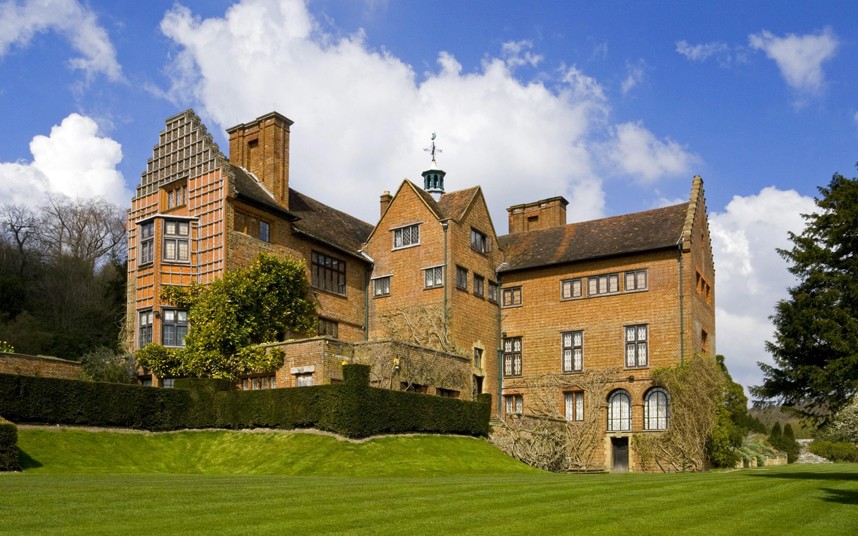
Many of Churchill’s books (particularly his memoirs) were written at Chartwell, the private house that’s most closely associated with his later life. Chartwell is a special place, with the spirit of the great man still clearly felt in every room. It is a privilege to be able to walk where he walked, breathe the air that he breathed, and appreciate the beauty of the place he called home.

ChartwellMain_2259431k

Home is … where exactly?

Springlock Cottage Lawns MownHaving just moved to a new home in a new country – for the 6th time – I find myself wondering what “Home” really means.

When our children were younger, I would have defined “Home” as being the house where we (all) lived as a Family. But with Jonathan and Alex at University in different countries, that definition doesn’t really cut it anymore.

At various times I’ve used the word “Home” to mean my Homeland (New Zealand), my student accommodation, my shared apartments, the houses we’ve owned, and the houses we’ve rented. I’ve even started to refer to a Chateau we’ve lived in for a week or so as “Home” (somewhat wistfully).

But it’s not Place that turns a house into “Home”. It’s the people in that Place, and their proximity to your heart. So Home is a much more fluid and flexible space than it once seemed to be.

A couple of days ago, my wife defined “Home” as “anywhere your WiFi connects automatically”, and I think there might be something in this definition.

Anywhere I’m feeling secure enough to use the WiFi connection, I’ve pretty much made myself “At Home”!

Change Is Good

As I contemplate moving countries for the 6th time in my life, I am struck with how easy and normal it seems.

Sure, there’s stuff to be managed and the inevitable snags when setting up new bank accounts, new telephone numbers and selling old cars. But it’s also refreshing: a chance to slough off the skin of a old life and start afresh.

Admittedly, it’s the first time in nearly 25 years that we have moved countries on our own dime, with the need to pack, freight and unpack everything for ourselves.

But that is also a blessing in disguise, because it provides a powerful incentive to assess each possession carefully. We’re disposing of lots of stuff that has, in the past, just made its way from country to country, without undergoing much in the way of scrutiny.

Now we’re only keeping what we really want to keep, and that’s powerfully liberating.

Most people admit – if forced – that “change is good”. But they admit it with a grimace.

Not me. Change = big, wide smile.

Creativity

“If you’re not prepared to be wrong, you’ll never produce anything original.”

– Ken Robinson, The Element

Robinson reinforces Seth Godin’s assertion that real art requires risk.

If you know you can do it, you’re not making art. You’re engaged in production; the “D” in R&D. Real art is more like a research project: you really don’t know if the project is going to come up with a useful or beautiful answer.

You have to be willing to invest the time and energy to find out, regardless of the outcome.

If you already know the outcome, the endeavour might still be worthwhile, but don’t call it art.

Just Do It

Don’t think for a second that creativity equals inspiration.

Yes, inspiration is the start of the creative process, but nothing has been created until you put in the effort to complete that process.  To paraphrase Einstein, the sweaty 99% of the work still needs to be done before there is any value at all in the 1% moment of inspiration.

Too many people seem to think they qualify as creators because an idea stumbled out from the undergrowth of their mind and emerged blinking into the light. An inspired new idea needs to get out and play, to exercise , to work up a sweat and to labour for a while before it matures into something useful. Don’t expect to be praised or rewarded if you abandon your new-born idea and allow yourself to get bored and distracted by some new shiny object.

Yes, it’s true that the occasional Spartan baby survived the night on the mountainside. But that wasn’t due to the virtue of their parents.

Stop merely talking about your latest “inspiration” and start honouring it instead.

Creativity requires creation. So go make stuff. Just do it.

Art

“For the first time in history, most of us have the chance to decide what to do next, what to make, how to deliver it. Most of us won’t take that chance, but it’s there.”

– Seth Godin, The Icarus Deception

I can’t say that I agree with everything Godin writes. I don’t share his cynicism about the conventional world economy for a start.

But I do agree that the platform for people to express themselves – to “make art” – is more accessible than ever before. And the pressures for people to stay in the confinement of their “normal” box are just as strong as they ever were.

So I see new opportunities, but I don’t share Godin’s viewpoint that the only alternative to making art is some kind of Orwellian banality. Sure, some people choose to live a quiet, banal life, while others choose to live on the edge and make art.

But the important thing here is that it’s a free choice. Without that we’d be trying to live someone else’s dream, and that can never be art.

Social Acceptance and “Normal”

When asked recently* what he thought was the next social issue to undergo a sea change, Marc Andreesen replied:

Far more generalized acceptance of widespread variations in human behavior. All of us who were raised pre-Internet were taught that there is something called ‘normal,’ and I think that whole concept might go right out the window.”

You can see this already in many spheres. Partly where young people have been denied membership of the old “normal” (in areas such as employment, home ownership, etc), as well as areas where the next generation plainly decided that the way we had been doing it was wrong (IP around digital media, the degree to which undergarments should be a visible fashion statement, etc).

The interesting question is: what next? If you dispense with the limiting concept of “normal”, a whole lot of new possibilities open up.


*Credit: The New York Times. http://www.nytimes.com/interactive/2014/05/02/upshot/FUTURE.html?hp&_r=0


Youth Unemployment

<Originally a Facebook post – 14 April 2014 >

For nearly a year now, I’ve been thinking seriously about a specific social issue. That it’s taken me a year probably speaks volumes about my limited mental agility. But it also happens to be one of those thorny issues has been left to languish in the “too hard” basket by our political leaders.This – to me – is the one issue that sits above all the others that clamour for political attention. But if ignored, it’s also the one issue that has the potential to utterly destroy the current social/political structure in which we live.

That issue? Youth Unemployment.

Even as I write these words, they sound boring … your eyes probably glazed over at the mere mention. But I see this as by far the biggest threat to Western Civilization. Or to look at it more positively, the biggest potential opportunity for this Generation to improve the lives of the people who will be the next occupants of this planet: our children’s children.

And when I say “the biggest threat”, it may be already too late for some countries, where a whole generation of young people have already spent enough time unemployed that they are unlikely to ever be “employable” in the usual sense of the word.

Youth Unemployment is an issue in practically every country (developed or emerging). But it is a far more serious problem in some countries than in others, and the political classes seem utterly blind to the risks. In most of the countries with which I have first-hand experience (New Zealand, the UK, the US), the rate of unemployment for young people is higher than for the population as a whole. Even in countries like New Zealand, where overall unemployment is relatively low (5%), youth unemployment is around 15%. Sadly, in countries like France, Spain, Italy and Greece, the rate of unemployment for young people is radically higher than it is for the (already too high) population at large. This is where the issue morphs from being just one social ill among many, to being an absolute existential crisis for society.

For 25% of young French people to be unemployed is terrible. But in Italy it’s even worse, at 35%. I can almost comprehend what that must be like, but I can’t even begin to imagine how 55% of young Spaniards and nearly 60% of young Greeks lack employment. It doesn’t seem real. But unless the statisticians are lying, it has been that way for years. And that terrifies me, frankly. You can’t just dismiss people as lacking spine or motivation when more than half of them lack a job.

Unemployment is corrosive enough in small doses. In the recent recession, many people had the experience of a few weeks or months between jobs. But for people who come out of school or university and never, ever get a real job, the impact is crippling. Many employed people moan about their boss or their work, but even they can acknowledge the self-respect and the financial independence their job gives them. When a substantial proportion of society has never felt that self-respect, never enjoyed even a moment of financial security, and never had any prospect of improvement, corrosion turns to poison.

Why the political classes think this is acceptable is beyond me. Even if they don’t care about the next generation, you would think they would see the writing on the wall in the shape of the next election. And if not the next one, then definitely the one after that. Because the day is fast approaching when enough disillusioned young people will take power into their own hands, whether at the polling booth or by violent protest. Why wouldn’t they? What do they have to lose?

I’m not particularly a fan of Russell Brand. His recent social commentary has – for me – been tainted by his personal hypocrisy. But I have no doubt he is right when he points out that the (largely young) people who feel let down by the system will eventually vote – or act – to destroy it. Young people who are unemployed for any period of time have no vested interest in sustaining the structure of society they live in. Why should they? Society has failed and betrayed them.

Politicians have relied for years on the tenet that younger and poorer people are less inclined to vote. Which is why they’ve continued to pander to the greed and insecurity of those with the most to lose if the current system changes (and who therefore vote en mass). But that voting dynamic is already changing, and could turn on a dime if people coalesce around a timely spark. In countries like Greece and Italy, new political parties are already tapping into the growing disillusionment with establishment politics. It’s easy to imagine a “flash-mob”-style campaign, wrapped around an issue like Youth Unemployment, putting one of those parties into power with a mandate to change the system from the ground up. Would they know what to do? Possibly not. Would that stop them dismantling the current system? Hell no!

Of course there’s a limit to what Governments can do to reduce Youth Unemployment. Governments, despite what Monsieur Hollande might think, cannot sustainably create useful jobs. But they can at least get out of the way by removing barriers to job creation. And they can resist the temptation to protect at all costs the wealth of the older, voting classes, at the expense of the young.

Why do I feel this social issue transcends all the others? Because the solutions to most other social ills rely on the next generation paying for the current generation’s future healthcare, pensions and infrastructure. All the concerns du jour like how to pay for the NHS or how to ensure that people can retire with dignity are predicated on the next generation’s willingness to pay for the promises made today (or last week, or last year). Remove that one presumption and the system implodes like the Ponzi scheme that it is.

If enough of that next generation is deprived of a decent income, they clearly cannot play their part in sustaining the system as it exists today. But much more importantly, if they are denied the right to their own dignity, security and independence they simply won’t want to sustain the system. They will happily bring it down if they think there’s the slightest chance that whatever replaces it will treat them a little better.

There it is: Youth Unemployment. It still sounds boring, but for some reason it’s important to me.

I’ve never really felt like I “owned” a specific social issue before. I don’t really feel like I chose this one … it just seems to have chosen me.

What do I intend to do about Youth Unemployment on a Global scale? I really don’t know. But somehow I do know that it’s my job to do something about it.

Any Suggestions? …
Spring-cleaning and Memories


Spring

This week we start the process of moving to a new home, in a new country. We get the keys for our new house in the UK (and we have an overlap of a month before we vacate our house in France, so that’s time for a couple of car-loads tied in with other trips, and then a big truck-load at the end of May to take care of the larger furniture and appliances).

Springtime seems perfect for a big move: new growth everywhere; new colours; even the air seems new.

And spring is a great time to clear out lots of old clutter from past years and past lives. In our case that’s doubly enforced, as we are moving to a house that’s less than half the size of our current home.

Some people struggle to let go of old treasured possessions, but I find it liberating. Sure, there are some special things that I would not want to lose … at least not yet (childrens’ toys, their school projects). But these are truly “sentimental”, by which I mean that it’s the sentiment that I associate with the object that’s of value. I rarely see some of these objects from one year to the next, but they trigger the memories and feelings instantly when I do.

The most valuable possessions of all are our memories, and the space for these is still expanding …

Future and Past

“It strikes me that this may be one of the differences between youth and age: when we are young, we invent different futures for ourselves; when we are old, we invent different pasts for others.”

– Julian Barnes, The Sense Of An Ending

Time to turn this one on its head, I think … I still have plenty of personal futures yet to invent!