Half Mast

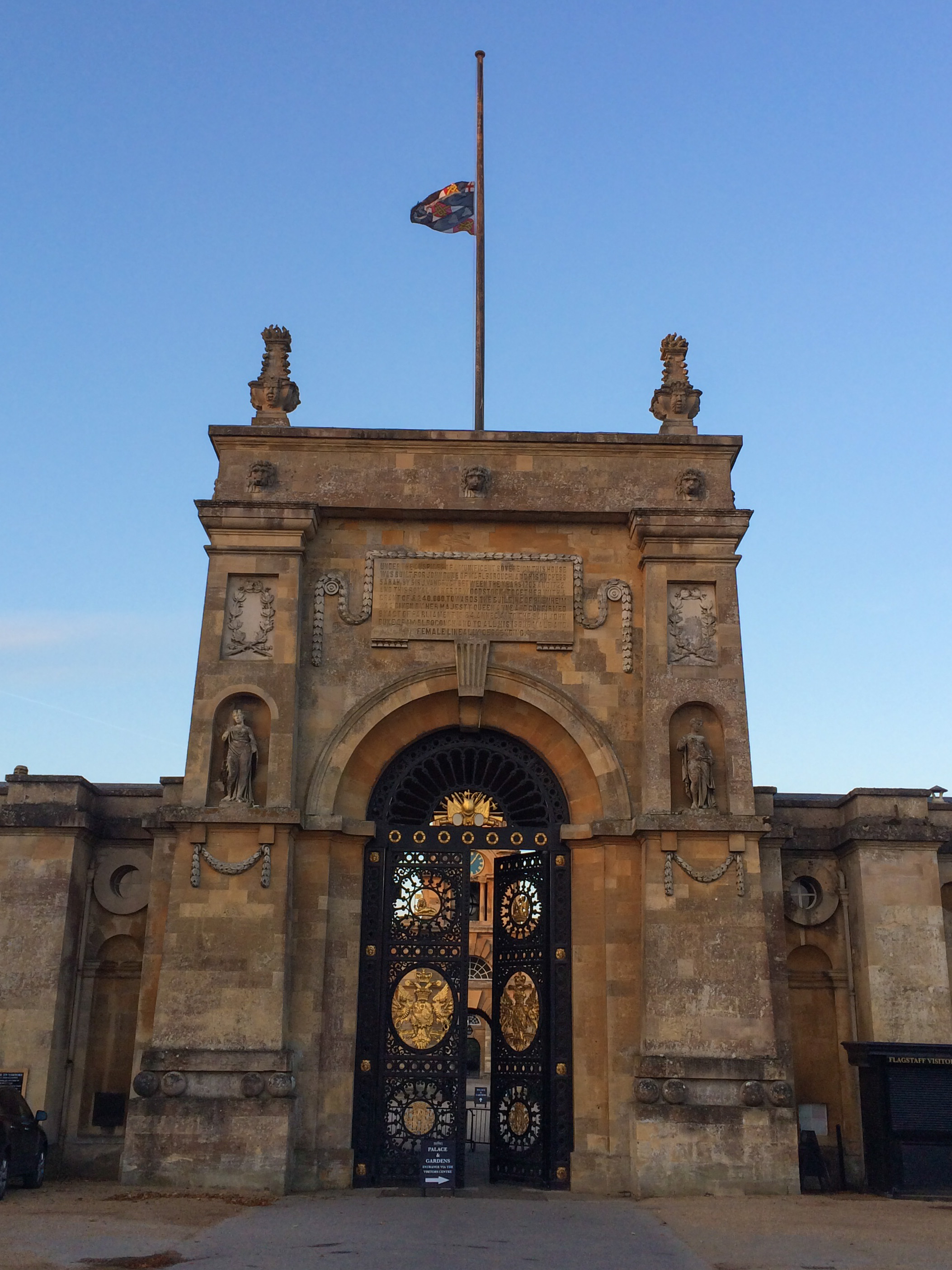
It has been a sombre week here at Blenheim Palace, and not just becauHalf Mast (5)se I’m leaving on Sunday.

The 11th Duke of Marlborough, John George Vanderbilt Henry Spencer-Churchill, died a few days ago, and his funeral is scheduled for Friday. The Palace is at half mast, and there’s a sense of gloom around the village.

The Duke was 88, and achieved a great deal during his tenure as master of Blenheim. He was responsible for reversing three centuries of gentle decline and turning the Estate into a fully functioning, profitable and sustainable business. He commercialised tours of the Palace and established the calendar of grand events that keep the place buzzing (and profitable) throughout the year. At the same time, he managed to zealously guard his inheritance against the encroachment of both the 20th and 21st centuries. Which is why Blenheim still has the charm necessary to pull in thousands of visitors every day.

The 11th Duke leaves behind a lively, vibrant Estate and I hope he was able to feel unreservedly proud of his life’s work. Certainly he had the admiration and respect of both his peers and his staff, and far too few “great” men ever manage to achieve that. He will be missed by all who knew him.

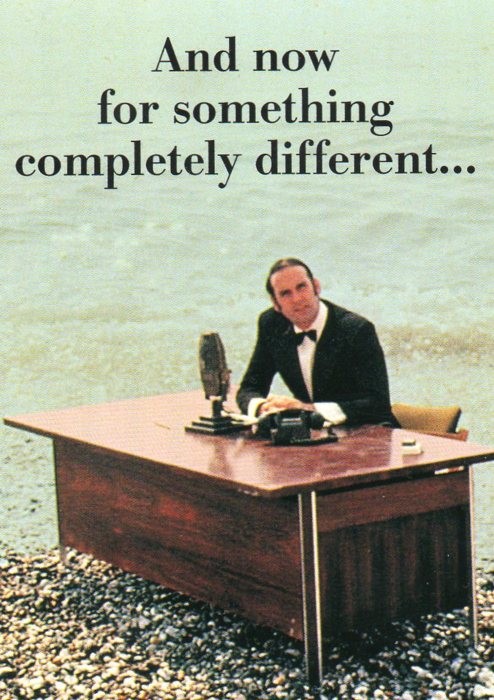
And Now For Something Completely Different …

And-now John CleeseIt was already clear two months ago, when I started my search for a new career here in the UK, that there was plenty of change ahead in my life. I fully expected to find myself working in a whole new industry, with new challenges and new learning to be done.

Since then, I have had lots of interesting conversations with recruiters and companies, many of which seemed intriguing and appealing, at first. But the more I talked about these roles, the less I felt drawn towards them. In many cases, it was not so much the work itself as the lifestyle that surrounds it. With the days getting shorter now, and the nights much cooler, I’m keenly aware of what the next 6 months will be like. I honestly don’t think I want to get up in the dark, commute an hour to work, then drive home in the dark at the end of the day. I’ve done my share of that, and it sucks at my soul like one of Harry Potter’s Dementors.

But that’s just how it is in the UK in winter. Yes, there’s a shiny car and an expensive house to compensate for those dark days. But I’m past the point where that compensation has enough appeal … if I had my way, every day would end with me sitting outside on the deck, chatting with friends and watching the sun go down. That’s what Real Life looks like to me. And I came to realize last week that this isn’t what I was interviewing for. The gap between Real Life and “Existence” (albeit a well-paid existence) has been slowly coming into sharper focus.

So over the past month I have been feeling steadily less enthusiastic about the commuting and the business travel that would go along with the kind of job for which I was applying. And to my surprise, I was getting more and more interested in something different altogether …

To keep my brain from going to mush over the summer, I bought an Apple Mac and taught myself to write iPhone and iPad apps, using Apple’s new Swift language. This is something I’d not done seriously for 10 years, and something I’d not been paid to do for over 15 years. I didn’t really have much clue whether I could still do it, or whether I would still like doing it. Turns out the answer to both questions is a resounding “Yes”.

But this was initially just something to keep my brain active. Something creative to do between job interviews. It wasn’t until late last week that it occurred to me that I could potentially go back to writing software for a living.

It will take time to polish my rusty software skills and to build up a profile and portfolio that will enable me to make a living as a freelance software engineer. And in the meantime, it’s not financially smart to be living somewhere expensive during the startup phase. Besides, even without the commute or business travel, I’m still not keen on being somewhere grey and cold and dark for half the year. The occasional holiday in the sun isn’t enough for me now: I want to see the sun most of the year (partly so I can watch it set each day, of course!).

And then I got to thinking: for the first time in history, it’s possible for someone like me to live on a remote mountainside or sit by the beach and work. In fact, it’s practically a moral responsibility to be located somewhere beautiful when writing software … not struggling with traffic and sitting in the dark all winter. Of course, most software people don’t have the luxury of upping sticks and going to live by the beach. Most people have ties of family or other responsibilities that keep them stuck in place. But since June, I suddenly don’t have those ties. And serendipitously, I also happen to know of a home by the sea, in one of the most beautiful places on earth: Golden Bay, where I grew up. The icing on the cake is the opportunity to be near my parents and siblings, who have each spent their own time wandered the globe, but have all found themselves back in Golden Bay in recent years.

So there it is. Something completely different. I had been expecting something different, but not that different!

And in usual Manson fashion, decision turns quickly to action. So it was last Friday morning when I first gave any serious thought to making a career as a freelance software engineer. By Saturday morning I’d done the math and worked out where I would need to be to give myself the (financial, emotional and climatic) space to make this work. By Sunday morning it was all decided. Tomorrow I’m getting the first quotes from the moving companies. And if all goes to plan, I should be sitting (working hard! really!) by the beach in New Zealand at the end of October. Just enough time now to visit friends in the UK, do some last-minute sightseeing and catch up with Alex in Lille before the door of the Airbus A380 closes behind me …
Right. What’s Next?

I have been re-watching the first series of The West Wing …

“I’m sleeping better. And when I sleep, I dream about a great discussion with experts and ideas and diction and energy and honesty. And when I wake up I think: ‘I can sell that’”

– President Bartlet.

Doesn’t this sound so utterly quaint and old-fashioned? But you know what? I prefer that 2000-era West Wing naïveté to today’s political cynicism and negativity.

I can’t even imagine a current politician wanting to engage in that kind of intelligent debate.

250px-TheWestWingEverything still is possible; there’s such a huge amount of untapped positive capability in the world. But nothing good will happen while politicians believe that the only way to remain in power is to manipulate peoples’ fears that things will inevitably get worse.
Time to contemplate a world where Martin Sheen really does get to be President … “Right. What’s next?”

Autumn

There was a different mood around Blenheim Park this morning. A distinct change of air. It was almost as if the earth has been breathing in all summer long, but just this morning it has started gently to exhale.

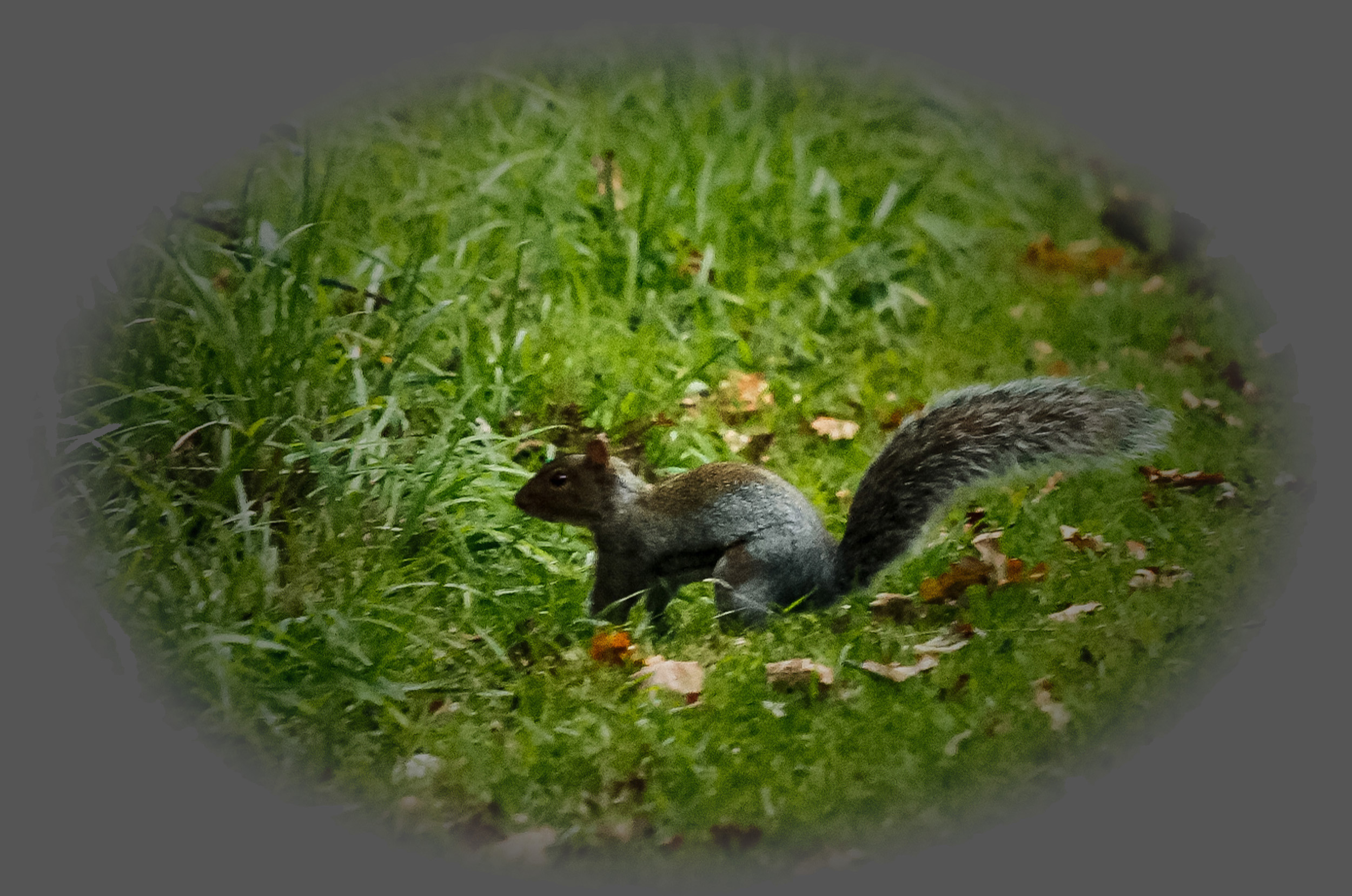
The leaves on the trees are (mostly) still green, but they know their days are numbered.Squirrel

The squirrels, who were hardly to be seen at the height of summer, have shaken off their lethargy and are gathering nuts with a grim look of determination on their faces.

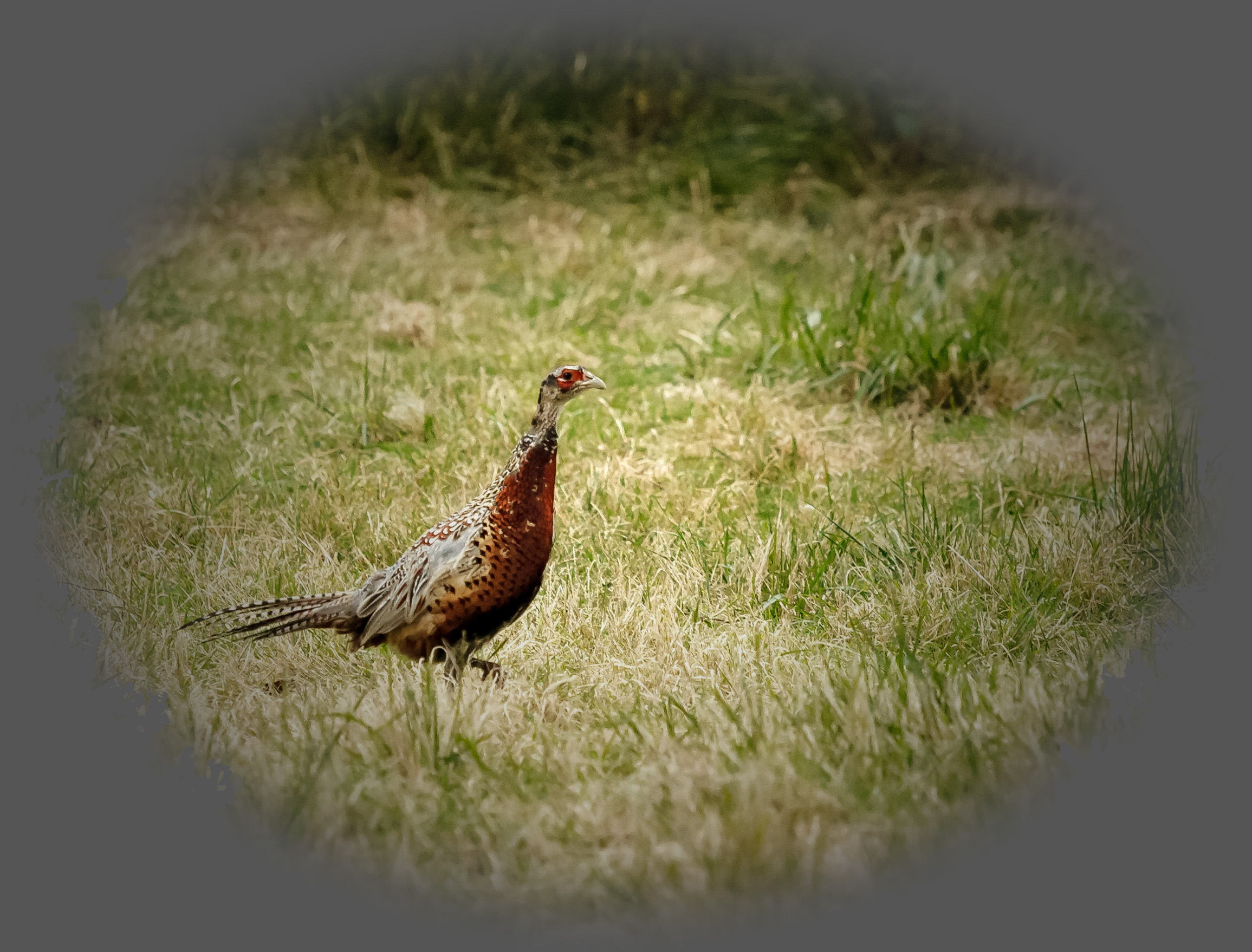
Their urgency seems to have affected the other animals around the park: the deer have retreated further from the roads and pathways, and they dart into the bushes with a palpable sense of fear now. The pheasants still coat the hillsides, but the green grass has browned at the edges and their flecked plumage makes them suddenly invisible against the background. They seem to know what’s coming next.


PheasantNo doubt there is an official “first day of Autumn”, though I can’t remember what date that might be. But at Blenheim Palace, I know that it’s today.

All of which could be interpreted as some kind of metaphor for my own life. There’s certainly plenty of change in the air, with a range of interesting new career options to explore and new experiences to be had.

But frankly, I’m not done with summer yet!

Where are all the Mad Scientists?

As a long-time GPS geek, I was interested to discover that it’s the 300th anniversary of the Longitude Act.

This amazing UK Act of Parliament, passed in July 1714, authorised a generous prize for the person who “found the longitude”. Back then it was easy enough to compute a ship’s latitude by observing the sun’s altitude at midday. But longitude could only be computed by dead reckoning, and there was no reliable way to reliably track your course and speed over a long voyage. The rapid expansion of global maritime trade, coupled with a few notable shipwrecks resulting from navigation failure, led to the establishment of the Longitude Prize in the last days of Queen Anne’s reign:

“The Discovery of the Longitude is of such Consequence to Great Britain for the safety of the Navy and Merchant Ships as well as for the improvement of Trade that for want thereof many Ships have been retarded in their voyages, and many lost…” [and there will be a Longitude Prize] “for such  person or persons as shall discover the Longitude.”

The prize was a doozy: £20,000 cash, or roughly equivalent to £2.5M in today’s money.

Not surprisingly, this attracted plenty of nutters, as well as some scientifically sensible ideas. The brightest minds of the age lent themselves to the problem, including Sir Isaac Newton (who was then the President of the Royal Society, as well as a member of the Board of Longitude, responsible for judging proposals and awarding the Longitude Prize).

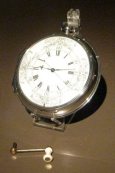
Most attempts to solve the Longitude puzzle focused on the need for precise, reliable shipboard clocks to replace the iterative, error-prone dead reckoning method with an absoluteH4_low_250, time-and-observation method. But some of the nuttier left-field ideas included a hinged observation platform atop a ship’s mast, and a global network of moored “beacon” vessels, each firing rockets to provide a visual time synchronisation signals for any vessels that happened to be  nearby.
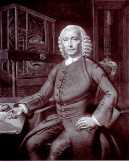
There were small prize disbursements made to various people for partial solutions to the puzzle, but the largest was to John Harrison who – in 1773 – was finally rewarded for his 4th generation maritime watch, named “H4”. This watch was shown to keep precise time during a journey from Portsmouth to Barbados, allowing accurate navigation to within the 30 mile tolerance set by the Longitude Act.

 John_Harrison_UhrmacherThese days, with GPS, longitude is no harder to compute than latitude, and it’s difficult to comprehend the days when the best-equipped expeditions of the richest Empire on the planet really didn’t know where on earth they were. I’ve always thought it a pleasant serendipity that GPS relies on very precise atomic clocks to measure the distances travelled by satellite radio signals, just as the historic solution to the Longitude puzzle relied on precise maritime clocks to measure the difference between shipboard time and the time at the vessel’s home port.
This week,ships-clocks-stars-book200 in Oxford, there was an excellent public lecture by Dr Richard Dunn of the Royal Maritime Museum, titled “Longitude Found”. There is also a commemorative exhibition (“Ships, Clocks and Stars”) running at the Museum in Greenwich through to the end of the year. Highly recommended for all those who like to think they know where they are …

So the Longitude Act was that rarest of things: a legal statute that actually achieved something useful and new. Hoping to replicate that success, the British Government is funding a new “Longitude Prize” to solve one of today’s intractable problems: how to overcome antibiotic resistant bacterial infections.

But it seems this new prize (£10M) hasn’t attracted nearly as much attention as its predecessor.Where are all the nutters with their wild ideas today? Where are all the mad scientists? Details can be found at http://www.longitudeprize.org.  


[Picture credits: all Wikipedia Commons]

Churchill (Again)

It has been something of a Churchillian month for me. I seem to keep stumbling across the guy’s tracks:

  • Two weeks ago, we visited Chartwell again. We arrived late in the day (courtesy of the M25 traffic) which was a blessing in disguise, as we were the last people through the house and could linger in each room undisturbed, just soaking up the atmosphere.
  • Last week, we happened across the spot (it’s a kind of temple … the guy had style!) in Blenheim Park where Churchill proposed to Clementine in 1908. They were to remain married for 57 years, until his death in 1965.
  • Today, my morning run took me past the village church at Bladon, where all the Spencer-Churchills are buried, so I called in to pay my respects.

Winston_Churchill_(1874-1965)_with_fiancée_Clementine_Hozier_(1885-1977)_shortly_before_their_marriage_in_1908The thing that keeps striking me about Churchill’s life is how much of a struggle it was. It would be easy to think that he came from a privileged background and that he somehow lived a more charmed life than the rest of us. Easy, but wrong.

Despite being remembered as one of the most successful leaders of the 20th century, Churchill’s career was punctuated by failures. These days, it seems a politician’s life is over with their first mistake; a single black mark ends their career. [Which is presumably why so many of our current leaders are faceless bureaucrats who continue to climb the ladder because they never take a stand on anything. But that’s a story for another day …]

It’s true that the world of politics is more transparent than it used to be, thanks to the internet and television. But Churchill’s failures were hardly the kind of small stuff that might be swept under the carpet by well-connected friends. I’m thinking of the Gallipoli campaign in particular, where he failed on an epic scale. Yet each time he picked himself up, drew what lessons he could from his failure, and then strode forward once more.

So it seems to me that Churchill’s distinguishing mark was his spine, his grit and his driving sense of destiny.

There’s learning here for us all. The best learning opportunity of our lives is when we encounter failure and have to make a choice:

  • We can treat that failure as evidence of an inherent character flaw within us; something of which we should feel ashamed, or evidence that a whole area of life needs to be feared and avoided;
  • Or we can treat each failure as a growth opportunity, from which we can emerge stronger, better-equipped to take on the next challenge that comes our way.

Churchill wrote frequently about the need to struggle, to persist in the face of opposition and to pick oneself up and march on after a failure:

“Success is not final, failure is not fatal: it is the courage to continue that counts.”

“Success is stumbling from failure to failure with no loss of enthusiasm.”

“To improve is to change; to be perfect is to change often.”

 “This is no time for ease and comfort. It is time to dare and endure.”

“Courage is the first of human qualities because it is the quality that guarantees all the others.”

 “I would say to the House, as I said to those who have joined this government: I have nothing to offer but blood, toil, tears and sweat.”

And now a quote from me (channelling Winston):

“Anything worth doing carries the risk of failure. And every failure is a learning opportunity. The only true failure in life is not to have tried.”

Time and Money

“When you reach a certain level of success, what really strikes you about money is its limitations. And the really big thing it can’t buy – after love and personal integrity – is time.”
– Tamara Mellon, OBE (perhaps an unexpected source of wisdom, but wise she most definitely is)

Beauty

You know the moment when you round a corner and see a vista that literally has you breathless? Or you look up from your coffee to see the most beautiful women in the world walk by? Or you observe a child and a dog having a moment of deep connection as they pass each other in the park?

Those are the moments I live for. Everything else is just life-support for these moments of breathtaking beauty that make life worth living.

We’re not always tuned to these moments … too often we are in a hurry or we’re caught up with thoughts that distract us at the critical instant when beauty chooses to reveal herself.

Which is a pity, because the deep impact of beauty is truly a momentary thing. Stay looking at the same inspiring vista for more than a few minutes and it doesn’t become any more beautiful; give it a few hours and your eyes are ready for another sight, even if it’s one that’s objectively less spectacular. Spend an hour in the company of the beautiful woman and while she’s still just as beautiful, you’ve eventually learned how to breathe again and your initial feelings of awe and sensory overload have begun to wane.

Why is that?

Is it some kind of self-protection mechanism, to avoid the world becoming dull once you’ve seen “the best” view or met “the most beautiful” person or had “the nicest” encounter with a cat/dog/ferret/furry-pet-of-choice?

Or is it just your brain recalibrating? Taking the new information, absorbing it and preparing your spirit for the next exciting, beautiful instalment of life?

42

H2G2 UK front cover.jpg

I have a habit of stating the obvious which – if you’re smarter than me – guarantees that you’ll think me an idiot. But if you’re around the same degree of smartness, those obvious utterings can sometimes be mistaken for insights.

So it just occurred to me today that the iPhone really is the Hitchhiker’s Guide to the Galaxy. My daughter, Alex, has been saying this for some time, but in the past I’ve always nodded and carried on staring at the screen, ignoring the significance of her words. So today, she spelled it out for me:

  • I used it to navigate across a new city, with its cute French accent burbling directions in my pocket as we walked
  • I read some (non-Vogon) poetry on it, while waiting for the castle in Ghent to open at 10am
  • I used the Babelfish function to translate the Flemish name of the fish I was about to eat for lunch
  • I asked it to compare the price of lunch in Euros, Pounds and (inexplicably) Altarian dollars
  • I took a photo of an alarmingly long caterpillar and it told me what species it was
  • We even saw a Hitchhiker’s Guide field researcher working on updating the Guide (OK, it was a poor guy with a Google backpack and a minder to keep him from getting mugged or pelted with Belgian chocolates, but the idea was the same … he even looked a bit like Ford Prefect from a distance).

And every day it’s the same … I wouldn’t travel the Galaxy without it. But most convincingly of all, ask it any question on Earth and the best answer Siri can come up with is: “mostly harmless”.

Douglas Adams’ vision has been fulfilled. Don’t forget your towel.