While I was “between continents” a couple of weeks ago, I chanced upon a speech by John Cleese on the subject of “Creativity”. It was quite an old video of a presentation to a Video Arts audience, and unfortunately it no longer seems to be publicly available (due to a copyright dispute?) But the audio and transcript can still be found here. [Note: it’s not the only presentation by Cleese on this topic, but I think it’s the most interesting version].

Cleese, in his inimitable style, makes a number of useful points about the creative process. But the one that stuck out, for me, was the importance of “subconscious persistence”: of continuing to work on a problem subconsciously, after you’d come up with the first (or second, or even third) viable solution.
Cleese noted that some of his Monty Python colleagues, whom he regarded as more innately talented comedians than himself, would nevertheless write routines that lacked the spark of his writing.
They were good. They just weren’t great.
He attributed the difference to his colleagues’ tendency to find a solution and to then move on to the next problem, whereas he would continue to roll the problem around in his subconscious mind, polishing and refining the solution it until it shone. Until it made the creative leap from Good, to Great.
The difference is clear, and it’s probably one of the definitive separators between art and science; in science, there’s a clinically correct answer to most problems, and that solution usually looks just fine without being anything special; sparkle or shine is not a requirement. In art, on the other hand, there’s no definitive solution to any problem, but some solutions just look “right”; their intrinsic greatness shines through. And I can see how Cleese’s “subconscious persistence” gets you from Good, to Great.
Cleese admits that he sometimes took longer to complete some routines than his colleagues, but that the difference wasn’t significant over the long haul; most of his “extra” creative work was conducted in parallel, in his subconscious. And no comedian has ever been honoured (or remembered) for writing slightly faster than his or her peers. What’s remembered is the work that took the leap of quality; the work that made it across the line to greatness. The rest dies away, forgotten by everyone but the author.
Now this could be interpreted as a license to procrastinate, but it’s not (I loathe procrastination). The key is to keep up your momentum, moving consciously on to the next problem or opportunity, while continuing to subconsciously polish and refine your art until it shines. To use a sailing metaphor, you need to keep up your boat-speed, adjusting course subtly and continuously in response to changes in the wind and sea. At any moment you’ll likely be a few points off the perfect line, but you’re able to rapidly respond to the ever-changing environment. That’s infinitely better than sitting dead in the water, trying to calculate the perfect course before heading off. Take that approach, and you’ll never get anywhere.
Are these contradictory statements? Perhaps, but they represent the inherent conflict in real art, between progress and perfection.
So shine on … and hurry up about it!



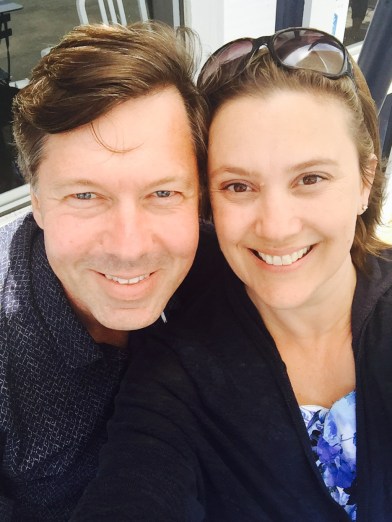 Looking back on the past year, I think perhaps blogging had become something of a solo pursuit. It was “all about me” for a while there. So it has taken me some time to found my voice again, as part of a new “us”.


 Paul Manson