As a long-time GPS geek, I was interested to discover that it’s the 300th anniversary of the Longitude Act.
This amazing UK Act of Parliament, passed in July 1714, authorised a generous prize for the person who “found the longitude”. Back then it was easy enough to compute a ship’s latitude by observing the sun’s altitude at midday. But longitude could only be computed by dead reckoning, and there was no reliable way to reliably track your course and speed over a long voyage. The rapid expansion of global maritime trade, coupled with a few notable shipwrecks resulting from navigation failure, led to the establishment of the Longitude Prize in the last days of Queen Anne’s reign:
“The Discovery of the Longitude is of such Consequence to Great Britain for the safety of the Navy and Merchant Ships as well as for the improvement of Trade that for want thereof many Ships have been retarded in their voyages, and many lost…” [and there will be a Longitude Prize] “for such person or persons as shall discover the Longitude.”
The prize was a doozy: £20,000 cash, or roughly equivalent to £2.5M in today’s money.
Not surprisingly, this attracted plenty of nutters, as well as some scientifically sensible ideas. The brightest minds of the age lent themselves to the problem, including Sir Isaac Newton (who was then the President of the Royal Society, as well as a member of the Board of Longitude, responsible for judging proposals and awarding the Longitude Prize).
Most attempts to solve the Longitude puzzle focused on the need for precise, reliable shipboard clocks to replace the iterative, error-prone dead reckoning method with an absolute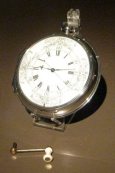 , time-and-observation method. But some of the nuttier left-field ideas included a hinged observation platform atop a ship’s mast, and a global network of moored “beacon” vessels, each firing rockets to provide a visual time synchronisation signals for any vessels that happened to be nearby.
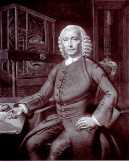
There were small prize disbursements made to various people for partial solutions to the puzzle, but the largest was to John Harrison who – in 1773 – was finally rewarded for his 4th generation maritime watch, named “H4”. This watch was shown to keep precise time during a journey from Portsmouth to Barbados, allowing accurate navigation to within the 30 mile tolerance set by the Longitude Act.
 These days, with GPS, longitude is no harder to compute than latitude, and it’s difficult to comprehend the days when the best-equipped expeditions of the richest Empire on the planet really didn’t know where on earth they were. I’ve always thought it a pleasant serendipity that GPS relies on very precise atomic clocks to measure the distances travelled by satellite radio signals, just as the historic solution to the Longitude puzzle relied on precise maritime clocks to measure the difference between shipboard time and the time at the vessel’s home port.
This week, in Oxford, there was an excellent public lecture by Dr Richard Dunn of the Royal Maritime Museum, titled “Longitude Found”. There is also a commemorative exhibition (“Ships, Clocks and Stars”) running at the Museum in Greenwich through to the end of the year. Highly recommended for all those who like to think they know where they are …
So the Longitude Act was that rarest of things: a legal statute that actually achieved something useful and new. Hoping to replicate that success, the British Government is funding a new “Longitude Prize” to solve one of today’s intractable problems: how to overcome antibiotic resistant bacterial infections.
But it seems this new prize (£10M) hasn’t attracted nearly as much attention as its predecessor.Where are all the nutters with their wild ideas today? Where are all the mad scientists? Details can be found at http://www.longitudeprize.org.
[Picture credits: all Wikipedia Commons]
 Paul Manson